

Welcome back to This Week in Biotech by Biotech Blueprint, edition 88, covering biotech and pharma news from January 30th to February 5th, 2026.
🎙️ Biotech Blueprint brings you weekly video updates on the latest biotech and pharma news, plus in-depth podcast interviews with industry leaders. You can find us on YouTube, Spotify, and Apple Podcasts. If you want to be featured on our podcast, get in touch.
🌐 For consulting inquiries, please visit BiotechBlueprintConsulting.com.
👥 And if you haven’t already, please connect with me on LinkedIn.
VIDEO SUMMARY
THIS WEEK’S KEY TAKEAWAYS 🔑
Hims & Hers escalated the GLP-1 pricing fight by launching a compounded semaglutide pill at direct-to-consumer prices ($49 first month, then $99/month). Novo Nordisk went straight to illegal copycat framing, with the FDA commissioner publicly warning the agency will move against mass marketed compounded products that imply equivalence to approved drugs. I don’t think the question is “will people buy it?” They will. The question is what patients think they are buying, and how long this can exist before enforcement and lawsuits show up. If regulators let this stand, every future obesity pill becomes a price war on day one. If they don’t, this pressure doesn’t go away, it just moves to the next loophole.
Novo’s downbeat 2026 outlook, guiding sales and operating profit down 5% to 13%, put a big red circle around US net price erosion. Lilly got the opposite reaction. A strong quarter and bullish guidance reminded investors what it looks like when volume can still outrun price pressure. Lilly also kept pushing the access story with the $50 a month Medicare copay headline and the rise of Zepbound vials for self pay, a smart distribution move that also shows where the category is headed (simpler, cheaper entry points).
Outside obesity, the same theme showed up in different costumes: middlemen and cliffs. CVS, through its pharmacy benefit manager, is explicitly using formularies to accelerate the next biosimilar wave by swapping branded bone drugs for cheaper alternatives starting 4/1, building on its Humira playbook. Novartis, meanwhile, is staring at a patent cliff year and telling you up front that generics will chew a multi billion dollar hole in sales, so 2026 becomes a live test of whether its newer growth brands can compound fast enough to cover the gap.
On the clinical side, Ultragenyx posted durable long term gene therapy data in Sanfilippo syndrome type A, and with its resubmission in, the next real catalyst is the FDA decision expected in Q3 2026.
BIOTECH/PHARMA NEWS 🧬
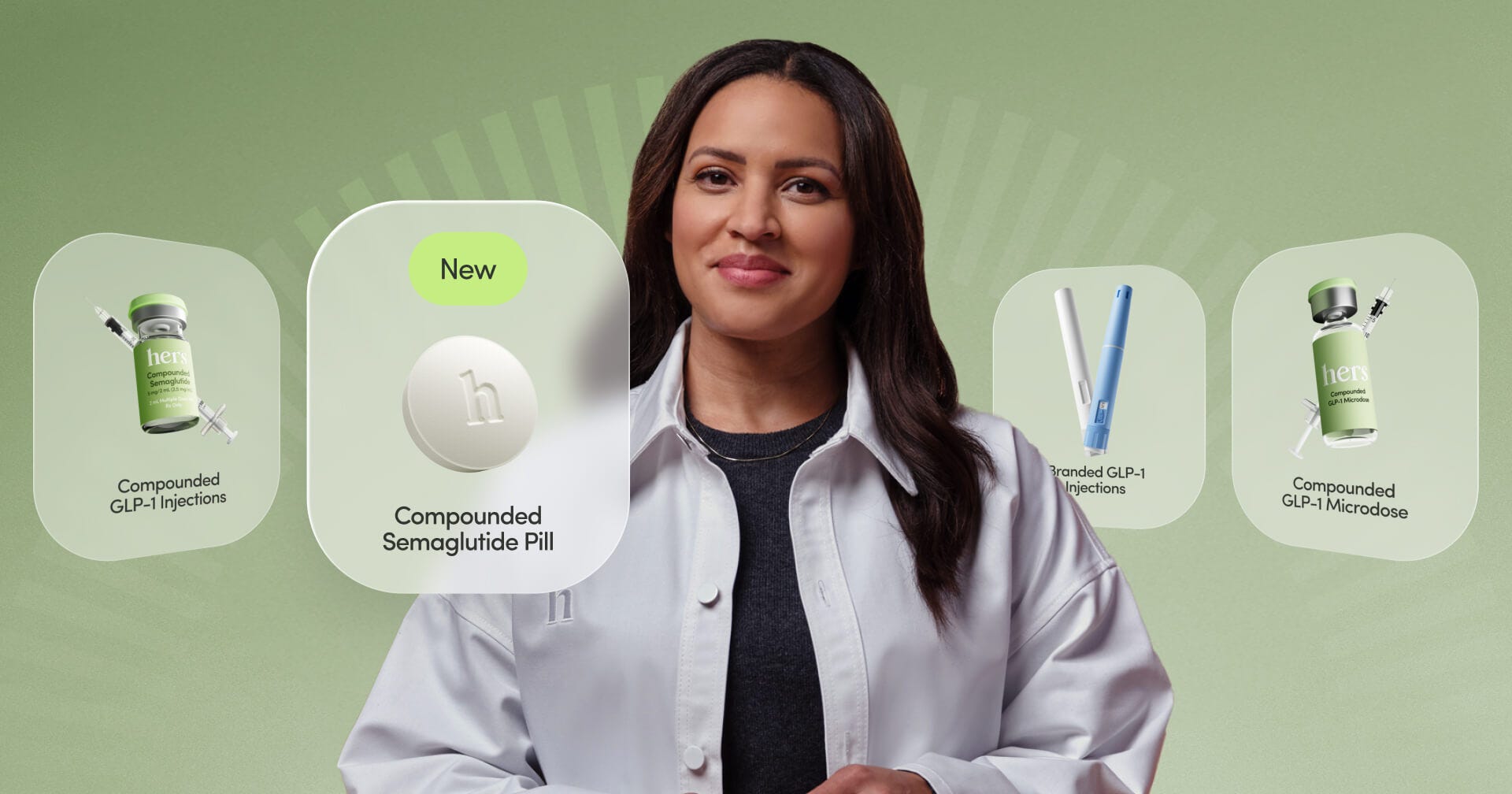
🔹 Hims & Hers said it will offer a compounded semaglutide pill for weight loss at $49 for the first month and $99/month after that on a five month plan, immediately reigniting the GLP-1 pricing war narrative. Novo Nordisk said the move is illegal mass compounding and promised legal and regulatory action, while FDA Commissioner Makary warned the agency will move against companies mass marketing “illegal copycat drugs” that imply equivalence to FDA approved medicines. Novo fell about 8% and Lilly about 6%, and Hims reversed and was down about 10% after hours after the FDA comments. Novo’s CEO also sharpened the scientific and messaging fight, calling the $49 pill a “waste of money” and arguing its branded oral depends on proprietary absorption tech, while Hims says it uses a different approach to support absorption. Consumers want oral GLP1s at DTC prices, and the first company that can deliver that inside the rules will own the next leg of the category.
🔹 Alvotech cleared a key de-risking step on an Entyvio biosimilar for inflammatory bowel disease. Its pivotal PK study for AVT80 (subcutaneous vedolizumab) hit primary endpoints in healthy volunteers, supporting planned filings for both its SC (AVT80) and IV (AVT16) versions of a biosimilar to Takeda’s $6.4B Entyvio franchise used in ulcerative colitis and Crohn’s disease.
🔹 CVS is using its commercial formularies to force the next biosimilar wave. Starting April 1, it plans to prefer denosumab biosimilars over Amgen’s Prolia and to prefer teriparatide generics over Lilly’s Forteo, framing it as 50%+ lower cost per prescription and a continuation of the pharmacy benefit manager playbook that already pushed most Humira users onto biosimilars.
🔹 The FDA hit Aquestive with a CRL for Anaphylm (sublingual epinephrine film) over human-factors and packaging use issues, not the drug itself. The agency flagged problems like difficulty opening the pouch and incorrect film placement in an emergency setting. Importantly, no CMC deficiencies were cited, and management says it can run an updated human-factors validation plus a small PK bridge study in parallel and resubmit as early as Q3 2026, keeping EU and Canada filings on track for 2H 2026.
🔹 Eli Lilly had its best day in 9 months after a Q4 beat and a bullish 2026 guide, with investors also keying on management’s framing of a $50/month Medicare copay for obesity drugs as a demand catalyst as early as July 1. On the call, Lilly highlighted growth in its LillyDirect channel (over 1M users added in 2025) and said Zepbound vials are now a meaningful entry point for self-pay, representing about one third of new patient starts. The company acknowledged pricing headwinds in 2026 but argued volume expansion and smoother access pathways can offset the hit.
🔹 Novartis is bracing for its biggest patent cliff in years and expects roughly $4B of generic-driven sales erosion in 2026. Guidance calls for low single digit sales growth but a low single digit decline in core operating profit, with Entresto already pressured in Q4 by U.S. generics and higher revenue deductions. The debate for 2026 is straightforward: can growth brands like Kisqali, Kesimpta, Pluvicto and Scemblix compound fast enough to outrun the hole as legacy exclusivity fades.
🔹 Novo Nordisk sold off after it pre-released a downbeat 2026 outlook, guiding sales and operating profit down 5% to 13%. The issue is not demand for GLP-1s, it is U.S. net pricing, where competition, discounts, and compounded semaglutide are tightening economics into a price fight. Novo pointed to strong early traction for its oral Wegovy launch, but the market is treating that as incremental volume that does not yet offset repricing of the base business.
🔹 AbbVie beat Q4 estimates, but the stock dropped anyway because the beat came from Humira, not Rinvoq, its newer immunology drug. Humira reported about $1.25B vs $0.99B expected, while Rinvoq and Skyrizi were essentially on plan (Rinvoq $2.37B vs $2.38B; Skyrizi $5.01B vs $4.9B). When a declining product supplies the upside, the market discounts it. Investors want the handoff to Rinvoq/Skyrizi to outperform.
🔹 Regeneron is keeping the cash engine running while pushing a heavy 2026 pipeline cadence. Q4 revenue rose 3% to $3.9B as Dupixent (Sanofi-reported) grew 34% to $4.9B and Eylea HD U.S. sales climbed to $506M, even as legacy Eylea continues to slide. Management expects at least four FDA decisions in 2026 and plans 18 new phase 3 starts, while guiding higher R&D spend and warning Eylea biosimilar pressure could intensify in 2H 2026.
CLINICAL TRIAL UPDATES 📊
🔹 Ultragenyx shared long term UX111 data in Sanfilippo syndrome A showing durable biomarker suppression and sustained separation from natural history out to 8.5 years. CSF heparan sulfate fell 64% median (most >50%), and earlier-treated children showed a +23.2-point Bayley III cognitive raw score benefit versus comparators, with supportive communication/motor trends. Safety remained consistent (mainly liver enzyme elevations). With a July 2025 CRL and a late January resubmission, this sets up a potential Q3 2026 FDA decision if timelines hold.
Have a great rest of your week and thanks for reading Biotech Blueprint!
